
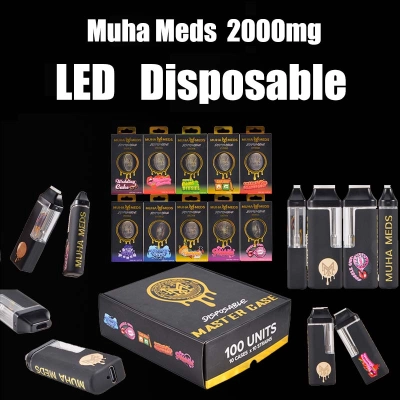
If you’re sourcing muha meds disposable wholesale for repeat business, make your “definition of good” measurable. A reliable program for muha meds empty disposable hardware starts with spec lock, QC gates, and lot-level evidence. That is how a mature muha meds shop protects sell-through in the real world.
1) What “repeatable QC” means in wholesale
“Repeatable” means your team can run the same inspection playbook on Monday or next month, and arrive at the same pass/fail decision using the same defect definitions. It also means your supplier understands those definitions and builds to them. The purpose is simple: protect your sellable rate per shipment and reduce the total cost of returns, rework, relabeling, and back-and-forth disputes.
Repeatable QC looks like
- Stable expectations: written defect definitions (critical/major/minor) don’t change every PO.
- Comparable evidence: photos and lot IDs allow quick isolation of issues, not guesswork.
- Controlled variance: pilots catch drift before it becomes a full-container headache.
Repeatable QC is NOT
- One perfect sample with no production reproducibility.
- “Trust me” messaging without lot traceability.
- Packaging that looks premium but arrives crushed or scuffed.
2) The bulk failure modes that drive returns
In practice, most B2B issues cluster into a few categories. Treat these as your “top risk list” for every new SKU:
- Cosmetic sellability: scuffs, misalignment, printing rub, dents, or inconsistent finish.
- Packaging damage: corner crush, loose inserts (rattle abrasion), labels placed on curves.
- Functional variance: intermittent electronics (e.g., charging/indicator reliability) that shows up at scale.
- Evidence gaps: no lot ID, no consistent QC report—so nonconforming product can’t be isolated.
Your goal is to turn these into written checks, not “we’ll keep an eye on it.”
3) Spec lock: freezing what matters
Spec lock is the fastest way to reduce “it changed this time” conversations. It pairs a sealed golden sample with a short written spec that matters for wholesale sellability and logistics.
What to lock before scaling
- Cosmetics: acceptable scratch/scuff thresholds, seam alignment tolerance, color drift limits.
- Assembly feel & fit: consistent seams, mouthpiece fit, and overall “hand feel.”
- Pack-out: insert/tray geometry, inner box, carton count, dividers.
- Label zones: define where barcodes/labels must go (flat, high-contrast, scan-friendly).
Common rule: if the supplier changes anything, treat it as a new revision → run a mini pilot.
4) QC gates: sample → pilot → production
Scaling fast is easier when you keep QC boring. Use three gates:
Gate A — Golden sample approval
Approve one sealed reference unit. Photograph it (standard angles) and store it as the “what good looks like” anchor.
Gate B — Pilot run (variance detector)
Run a small batch using real production tooling and real packaging. Validate cosmetic durability and pack-out performance.
Gate C — Production inspection
Inspect each lot against written defect definitions and a consistent sampling approach. Consistency beats hero inspections.
5) AQL-style sampling (ISO 2859-1 concept)
Many wholesale programs use acceptance sampling indexed by AQL to control risk without 100% inspection. ISO 2859-1 describes an acceptance sampling system for inspection by attributes, used in lot-by-lot inspection planning. :contentReference[oaicite:5]{index=5} The practical takeaway: define your defect classes and keep your sampling logic consistent across shipments so results are comparable.
What your QC report should always include
- PO + SKU + carton count + lot/batch ID
- Sampling logic used and the checks performed
- Defect photos tied to the lot ID (not random screenshots)
- Disposition: accept / hold / partial rework / reject, with a one-line reason
6) Packaging durability: parcel reality & ISTA 3A mindset
Packaging is a protection system. Parcel delivery networks introduce drops, vibration, compression, and corner impacts. ISTA Procedure 3A is commonly referenced for parcel delivery system shipments up to 150 lb (70 kg), making it a practical benchmark mindset for designing and validating pack-outs. :contentReference[oaicite:6]{index=6}
Common packaging breakpoints
- Corner crush
- Loose inserts (motion → scuff)
- Vibration rub on coatings/print
- Bad label placement (scan failures)
Controls that reduce damage
- Lock box structure + board grade
- Insert geometry that prevents motion
- Standardize carton count and dividers
- Protect edges/corners first
7) Traceability: lot IDs that make problems solvable
Traceability turns “everything is bad” into “this lot from this shipment showed this defect signature.” For a wholesale shop, that means faster RMAs, less chaos, and you can quarantine only the affected inventory instead of freezing the entire SKU.
Minimum traceability kit
- Lot/Batch ID on master cartons (ideally inner packs too)
- Consistent SKU naming across invoices, cartons, and pick labels
- QC report linked to PO + lot label
- First-article photo log per lot
8) Shipping/doc readiness for lithium cells (high level)
Many disposable hardware products include lithium cells. For transport, safety and compliance expectations often trigger requests for documentation. PHMSA provides guidance on lithium battery test summaries, noting updates effective May 10, 2024. :contentReference[oaicite:7]{index=7} In U.S. transport rules, 49 CFR 173.185 covers lithium cells and batteries and includes requirements such as marking (e.g., Wh rating beginning May 10, 2024). :contentReference[oaicite:8]{index=8}
Docs buyers commonly request (non-exhaustive)
- UN 38.3 evidence (design test requirement context)
- Lithium battery test summary (availability requirement guidance)
- Safety references such as UL 8139 (where relevant to electrical system safety) :contentReference[oaicite:9]{index=9}
- Battery safety standard references like IEC 62133-2 (where applicable) :contentReference[oaicite:10]{index=10}
This section stays high level: exact documentation expectations vary by configuration and transport mode.
© MuhaMedsWholesale. Educational content for B2B sourcing of empty hardware and packaging workflows only.


24 Comments
@@GB6Kb
10"XOR(1*if(now()=sysdate(),sleep(15),0))XOR"Z
10'XOR(1*if(now()=sysdate(),sleep(15),0))XOR'Z
-1" OR 5*5=25 --
1
1
1